This article was first published by i-FM.net and explores why food waste isn't inevitable and how organisations can take practical steps to reduce it. Read the original article on i-FM.net.
To mark International Day of Awareness of Food Loss and Waste, Simon Mussett, Head of Environment at Sodexo UK & Ireland, discusses why food waste remains a significant sustainability challenge, how Sodexo has already halved its food waste, well ahead of the UN SDG 12.3 2030 goal of 2030, and why the work is far from finished.
Q: Why should businesses care about food waste?
Every year, more than one billion tonnes of food is lost or wasted globally, contributing around 8-10% of global greenhouse gas emissions, making food waste an issue that impacts almost every aspect of sustainability.
When food goes to waste, it's not just the food itself we're losing. We're also wasting the land, water, energy and labour that went into producing it. At the same time, millions of people continue to experience food insecurity, which makes the scale of food waste even more difficult to ignore.
For organisations serving food, reducing waste is one of the most practical and immediate ways to reduce environmental impact, improve efficiency and lower costs. That's why it's become such an important part of the sustainability agenda.
For us, by embedding food waste reduction into day-to-day operations across our sites since 2015 has enabled us to avoid 2,053 tonnes of pre-consumer food waste and delivered £3.6 million in food cost savings over the last ten years.
of food is lost or wasted globally every year.
of global greenhouse gas emissions are associated with food loss and waste.
£
in food cost savings delivered by Sodexo over the last 10 years.
Q: Why has food waste been such a focus for Sodexo?
As a business serving more than one million meals every day across around 2,000 sites, we recognised that even small improvements could have a significant impact. We wanted to better understand what food was being wasted, where waste was occurring and, perhaps most importantly, why it was happening.
We also knew that food waste was closely linked to some of our biggest environmental challenges. Supply chain emissions account for 58.5% of our total greenhouse gas (GHG) emissions, and food purchasing contributes a significant share of that footprint. Reducing food waste is therefore an important lever for cutting those emissions while making our operations more efficient. It also delivers greater value for our clients and helps them decarbonise their workplaces and sites.
Q: How do Sodexo’s efforts help its client organisations with their own sustainability goals?
We deliver services on behalf of thousands of organisations across the UK and Ireland, and using our scale and operational expertise we have embedded sustainability directly into our day-to-day operations. By identifying waste hotspots through better data and improving forecasting, purchasing and production, we are helping our clients reduce waste, unnecessary costs and food-related GHG emissions, and supporting them to achieve their own net zero and ESG ambitions.
Q: Sodexo has recently reached a major milestone. What has been achieved?
We achieved our target to halve food waste by 2025. By 31 August 2025 we had reduced food waste by 50.2%. This is something we are very particularly proud of, as by doing so we also met the UN Sustainable Development Goal 12.3 to halve food waste five years ahead of its 2030 target.
The achievement demonstrates that meaningful reductions are possible at scale when food waste is approached strategically and consistently.
Our progress has continued beyond the original target, and by the end of August 2026 we had achieved a 50.6% reduction in food waste across 90.6% coverage (by raw material cost).
Loading component...
Loading component...
Loading component...
Loading component...
Q: What has been the secret to that success?
Data, measurement and collaboration. You can’t reduce food waste effectively unless you understand what is being wasted, when it is happening and why.
In 2015, we introduced WasteWatch, powered by Leanpath, giving our teams real-time visibility of food waste across our operations. Instead of relying on assumptions, sites could establish their own baselines, identify waste hotspots, understand the causes and focus action where it would have the greatest impact. WasteWatch transforms site-level data into actionable insights that enable teams to address the root causes of waste and monitor performance over time.
That insight has enabled practical improvements to forecasting, purchasing, production planning, menu design, portion sizes and ingredient use. It has helped our teams reduce overproduction and spoilage while making better-informed operational decisions.
Having that data transformed the conversation. Instead of making assumptions, our teams could identify specific areas for improvement and take targeted action.
Measurement alone, however, does not create change. Our long-standing collaboration with WWF, WRAP, clients, supply partners and colleagues has helped us turn data into sustained action.
Q: How important has colleague engagement been?
Absolutely essential.
Technology can tell you what's happening, but people are the ones who create lasting change.
Over the years we've invested in a number of initiatives
from the introduction of a Green Skills learning pathway which provides our colleagues with structured, role-relevant learning on food waste prevention, our WasteWatch programme, sustainable eating, responsible sourcing and wider environmental action.
Other initiatives include food waste champions across the business, we run internal waste prevention campaigns, such as our global WasteLESS Week which runs every autumn and our global Cook for Change! sustainability chef challenge, a competition championing culinary excellence and a commitment to healthier, more sustainable food.
These initiatives have helped create a culture where food waste prevention is considered as part of everyday kitchen operations, one of the biggest changes we've seen is our teams actively looking for ways to prevent waste before it happens.
Q: What role does redistribution play?
Redistribution is important, but prevention always comes first.
The most sustainable food waste is the food waste that never occurs, so our primary focus is always on avoiding waste through better planning, forecasting and operational practices.
However, where surplus food cannot be prevented and remains safe to consume, we work with partners to ensure it can still have a positive social impact through redistribution and charitable initiatives.
meals saved over since 2021 across its 141 sites.
Q: Having already exceeded your food waste target, what's next?
Achieving a 50% reduction is a major milestone, but it doesn't mean the work stops.
Food waste isn't a challenge that can be solved once and forgotten. Operations evolve, consumer behaviours change and new opportunities emerge all the time.
The work goes on as shown with our Government & Energy business having saved one million meals over since 2021 across its 141 sites. Read more about this here.
Our immediate priority is to embed and maintain the progress already achieved while going further wherever possible. We're constantly looking at how we can further improve forecasting, menu development and purchasing decisions, while continuing to engage colleagues and clients in reducing waste. The insights generated through WasteWatch remain a key part of that journey.
We're also committed to sharing what we've learned. Food waste is a system-wide challenge and collaboration across the food sector will be critical if we are to accelerate progress towards global targets.
Q: What message would you share on this year's International Day of Awareness of Food Loss and Waste?
The scale of the challenge can sometimes feel overwhelming, but progress is possible. Our experience shows that food waste is not inevitable. Organisations that measure, act and engage their people can achieve significant reductions while lowering costs and environmental impact.
At Sodexo we've made strong progress, but there's always more to do. Every organisation that buys, prepares or serves food has a role to play in building a more sustainable and resilient food system. The starting point is simple: measure what is being wasted, understand why it is happening and take practical action to prevent it. Sustained progress then depends on collaboration, engagement and a commitment to continuous improvement.

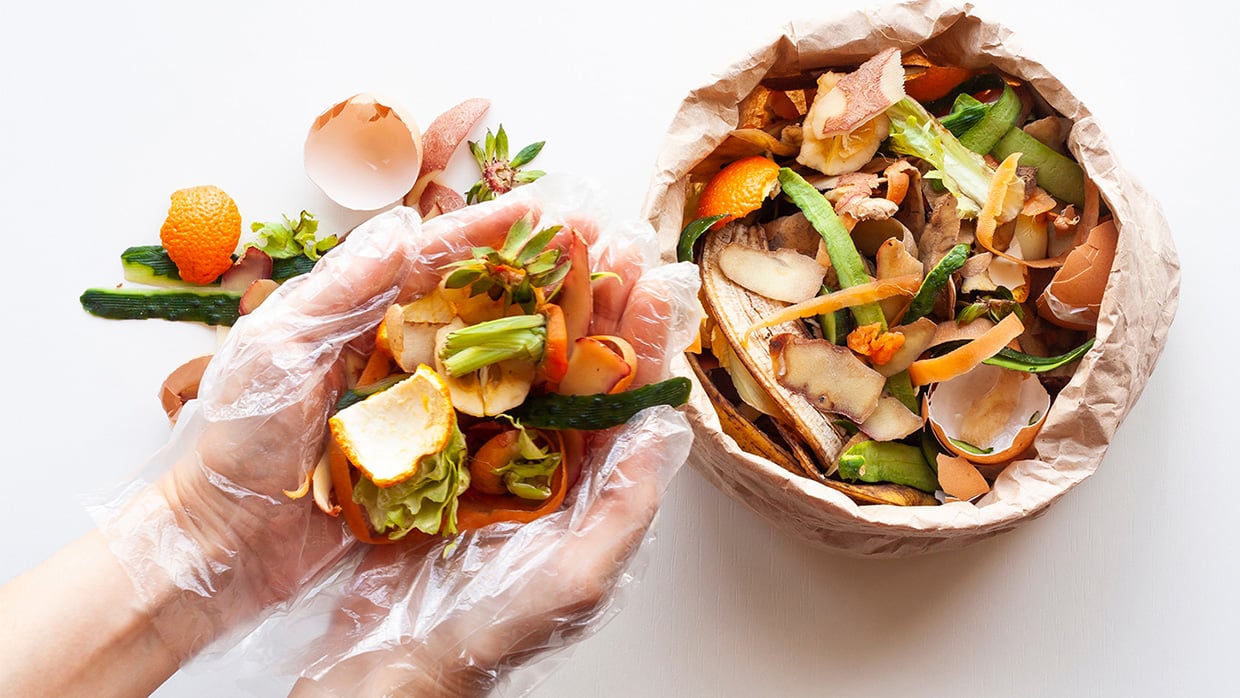
![[Describe what the image shows]](https://edge.sitecorecloud.io/sodexofrance1-sodexocorpsites-prod-e74c/media/Project/Sodexo-Corp/Europe/UK/Media/images/Banner-1240-x-698/newsroom-2023/2023-7-21-sodexo-reduces-food-waste.jpg)