How business leaders are achieving more with fewer resources
11 practical takeaways from sustainability leaders at Sodexo’s Community of Practice
When budgets tighten, businesses rarely reduce their ambitions accordingly. Instead, smaller teams are expected to find efficiencies while maintaining progress against increasingly complex commitments.
of surveyed CFOs consider cost reduction a strong priority
Up from 53% the previous quarter, according to Deloitte’s October 2026 UK CFO Survey. Read the survey.
For sustainability leaders, this creates a particular challenge because much of the progress they need to deliver depends on decisions made elsewhere in the business.
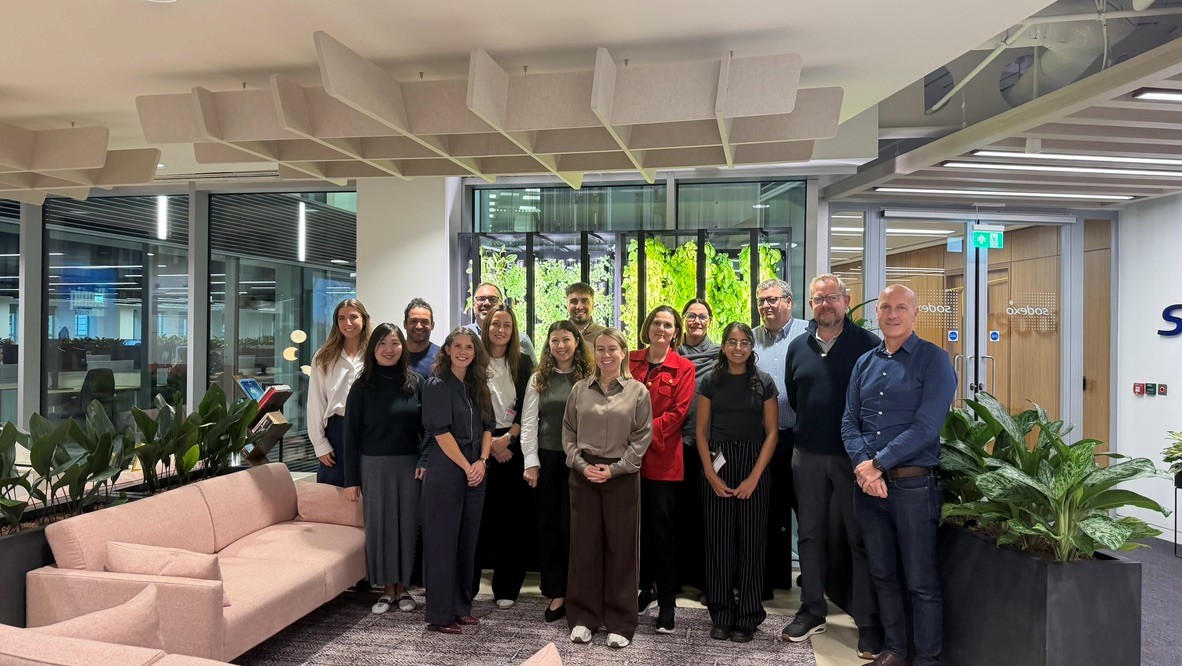
This was the focus of Sodexo’s 15th Community of Practice (COP) roundtable in October, which brought together senior decision makers from organisations including NHS England, GSK, Bunzl, Toyota, DPD, BNP Paribas, E.ON, Fooditude, Mazars, ING, the University of Greenwich, Pernod Ricard, Ayvens, UCL and the University of Birmingham. Established in partnership with FuturePlanet, COP brings senior sustainability and business professionals together quarterly to exchange experiences and explore shared challenges.
The discussion centred on making sustainability indispensable to business. Despite their different industries, participants recognised many of the same challenges. From their conversations, we identified 11 practical approaches to making progress with limited resources, offering valuable insights for leaders well beyond sustainability.
Setting the direction
Build a strategy that can adapt.
Long-term ambitions remain important, but the route towards them cannot always be fixed. The discussion explored using plausible future scenarios to anticipate change, while establishing broad principles that allow teams to adapt without continually revisiting the strategy.
Prioritise what matters, then engage the right people.
Mapping environmental risks across agricultural sourcing locations offered one example of identifying where attention is most needed. Similar discussions around healthcare procurement and logistics reinforced the importance of focusing limited resources on the areas of greatest impact. This illustrates how materiality can help focus limited resources, provided the people who influence the relevant decisions are engaged early.
Speak the language of the decision-maker, and link it to what the business measures most.
Fleet electrification provided a useful example of how examining lifetime operating costs, rather than purchase prices alone, strengthened the case for electric vehicles. It was a useful reminder that commercial value and sustainability are not necessarily competing priorities. Often, the challenge is demonstrating where they reinforce one another.
Translate external expectations into business action.
Customers, investors and insurers increasingly influence sustainability priorities, but their requirements may remain with the teams managing those relationships. Ensuring that these expectations reach procurement, operations and other relevant functions allows the business to respond more effectively.
Building the structure
Influence decisions before they are made.
Preventing a costly decision is easier than correcting it afterwards. Suggestions included adding a simple carbon-risk question to strategic approvals and developing different levels of governance depending on the significance of the investment. The intention is to improve decisions without introducing unnecessary bureaucracy.
Make accountability meaningful.
Link sustainability targets to senior pay, set out the risks clearly for the directors who make the decisions, and make relevant training mandatory. The discussion highlighted how, when sustainability is reflected in the measures that senior leaders and their teams are already accountable for, it becomes harder to overlook.
Mobilise the whole organisation.
Specialist teams cannot deliver every initiative themselves, particularly when resources are stretched. Their greater contribution often lies in providing expertise, frameworks and oversight that enable other functions to take ownership. Examples discussed included embedding engagement in a five-year business plan and setting sustainability objectives for executives that reflect their functions, helping make delivery a shared responsibility rather than the sustainability team’s alone.
Making it happen every day
Make the better choice the default.
The discussion highlighted the limitations of repeatedly reminding busy kitchen staff to conserve water and energy. Installing efficient equipment can achieve more lasting results. Similarly, incorporating sustainability criteria into product development from the outset removes the need to revisit decisions later.
Make sustainability a condition of doing business.
One procurement example highlighted how introducing carbon reduction requirements into tenders can drive change, with around 90% of non-pay spend now covered by a carbon reduction plan or net zero commitment. The discussion also demonstrated the importance of engaging suppliers and introducing requirements proportionately.
Communicate for the audience and the moment.
The importance of keeping messages relevant, simple and consistent. Different stakeholders need different reasons to engage, while existing opportunities such as town halls or seasonal business planning can make communication more timely and effective.
Collaborate beyond your own walls.
Working with peers, customers and suppliers can help organisations avoid duplicated effort and tackle shared challenges. Examples discussed included working through trade associations to align requests to farmers and collaborating with international health partners to develop more consistent requirements across health systems. Building on this principle, participants also discussed a simpler, shared approach to product carbon data, identifying an opportunity for further collaboration.
Greater progress through collaboration
Sodexo’s Community of Practice was founded on a simple idea. Using our client network, we wanted to bring senior professionals from different industries together to share experience and tackle common challenges. October’s conversation put that thinking into practice, as shared experiences opened up opportunities to collaborate on supplier carbon data and employee engagement.
Although sustainability provided the starting point, making better decisions, building accountability and mobilising teams are challenges across any business, which makes the collective experience within COP valuable well beyond sustainability.
You may also be interest in
Explore more
Further reading