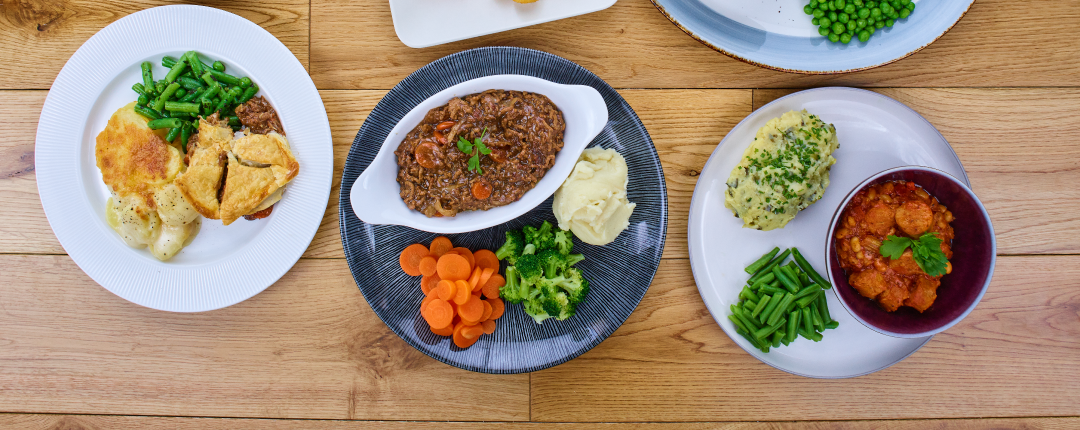
The big freeze: locking in the goodness in patient dining
Serving food that’s delicious, nutritious and sustainable takes careful planning, constant innovation and clever sourcing. We caught up with our main provider – the industry leader apetito – to see why freezing top-quality ingredients is key to serving food at its very best.
A shared heritage supporting patients and planet
Sodexo and apetito have lots in common: decades of experience serving great food, a strong focus on dietetic-led nutrition and a commitment to sustainability.
With a 20-year history perfecting frozen meals for patient dining, apetito is our key partner in hospital catering. Every day, they help us to serve dishes that are tasty, nutrient-packed and tailored to patient needs. Together, we ensure our meals aid recovery, support NHS goals around Net Zero and efficiency, and look great on the plate too.
We recently caught up with two apetito colleagues – registered dietitian Sophia Cornelius and national account manager Elaine Hasker – to find out more about their smart approach and planet-friendly techniques.
In this video, they share why fast freezing high quality food delivers the best results for patients and hospitals. They also explain how their commitment to sustainability is helping us to tackle the climate crisis together.
Innovating patient dining together
Sodexo puts the patient experience at the heart of hospital food. This means serving nutrient-dense meals that meet each patient’s individual needs, including those who may have smaller appetites, allergies or struggle with swallowing.
By working with apetito, we ensure that meals of all kinds contain the highest quality ingredients and are presented well when they’re served, even when pureed.
“Freezing is nature’s way of preserving food…so we don’t need to tin it or salt it. We use fast freezing to lock in the nutrition, with all meals frozen within the hour.”
This approach also helps us to improve the patient experience by ensuring that specialist meals, for example those free from 14 allergens, are always available for new patients or for unexpected surges in demand. In the same way, this approach also helps us to reduce waste by preventing unnecessary spoilage through over-production.
“We offer total flexibility for menu development and contingency planning, because our meals are easy to handle and come in different pack sizes. It means Sodexo can focus on the ‘last nine yards’ and deliver food at its best at the point of service.”
Sharing Sodexo’s commitment to sustainability, apetito won The King's Awards for Enterprise in Sustainable Development in 2024. The company is also a key partner of our award-winning Net Zero Supply Chain Engagement Strategy, helping us to reduce the emissions in our own supply chain.

Working to make healthcare more sustainable
Sodexo is on a mission to make eating well better for the planet by reducing the emissions associated with food and waste:
- We aim for our menus to feature 33% plant-based meals by 31 August 2025, and already present the plant-based options first by default. apetito carbon footprints all their meals, which helps us to develop menus that meet nutritional and sustainability goals and helps patients to make informed choices. This in turn supports our 2030 goal of 70% of our main meals being classified as low carbon (a meal that generates 0.9kgs CO2e or less).
- Food waste is a major source of carbon emissions, which is why we work hard to reduce it. This includes deploying the WasteWatch measurement tool to enable real-time tracking and prevent unnecessary waste. By enabling patients to choose their dishes much closer to mealtimes, apetito’s CarteChoix plated range is also helping us to meet our target of a 50% reduction in food waste by 31 August 2025.
- We recycle our uniforms and footwear and use recycled materials wherever we can. This includes collaborating with apetito to create a closed-loop recycling system that reduces plastic waste. Here, PET trays used in meal services are removed, processed, recycled and reused again, helping hospitals to operate more sustainably.
Supported by apetito, we’re helping hospitals to play their part in helping the NHS reach Net Zero by 2045. Our shared commitment to responsible sourcing, reducing food miles and innovating to reduce emissions is helping to make patient dining more sustainable every day. This work is a key part of Sodexo’s Social Impact Pledge 2030, which we’re delivering through a range of initiatives in health and care as we target Net Zero by 2040.
With top-quality ingredients frozen quickly, and delicious meals served with ease, we’re helping hospitals to lock in taste, nutrition and efficiency while protecting patients and planet.
You may also be interested in...
Our social impact
Loading component...
Loading component...
Loading component...
Our services