Belonging and Inclusion
International Chefs day 2026


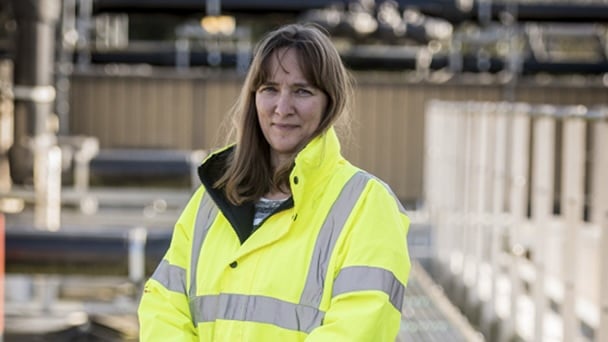
For 20 years, Samantha Young has strived for workplace excellence, leading delivery of global programmes both in-house and as an external partner. With two commercial models continuing to dominate the industry, our FM Platform Director shares her experience of both and offers her thoughts on the safest bet for the future.
As every FM professional knows, our industry has its own language. Which is why, amid a sea of integrators, managing agents, contractors and service providers, it might seem like there’s a raft of models to choose from. But boil it all down, and there’s really just two. Under the first model – let’s call it single supplier – one organisation directly delivers a wide range of workplace services.
Under the second, one organisation acts as an integrator that coordinates multiple separate providers. Over the years, I’ve delivered under both. In today’s complex workplaces, the water is muddied because no one really does – or can – do everything. But these distinct models still have real implications for performance management, business agility and future innovation. Which means it’s worth understanding the pros and cons.

Every client is unique, so it stands to reason that their workplace experience KPIs will vary; some are more outcome-based and others more input-driven. Either way, both models give in-house teams control over performance and cost, but it will feel different day to day. With a single supplier, there’s fewer sub-contractors and the delivery team is visible to workplace managers and employees.
With the supplier so deeply embedded at every level, problems can be seen and corrected fast. With an integrator, the team visible to workplace managers is invisible to employees, who instead see a range of providers. This arrangement certainly shields managers from the complexity of multiple SLAs, but it can also make it harder to shape a holistic experience because issues take longer to get noticed, filter up then get fixed.

In every sector, businesses are riding waves of change. Falling engagement and diminishing wellbeing are affecting retention and productivity, while shifting cost and supply pressures can complicate ambitions for efficient and low-carbon operations. Responding quickly is vital, but these layered challenges don’t map neatly onto traditional FM service lines. Under both models, the relevant partner should help to orchestrate a change of course. But when I worked for an integrator, I was always closer to the metrics than the frontline. Integrators tend to have a bird’s eye view of what’s needed, but not the cultural authority to turn poor relationships around or make someone else’s people work differently.
Single suppliers can affect deeper change faster, injecting a natural resilience into client contracts. I’ve seen it myself since I joined Sodexo, with experienced teams safely redeployed from food service to FM and vice versa to smooth the impact of unforeseen disruptions. It creates a level of agility that also bodes well as we all navigate the digital revolution ahead.

From catering to cleaning and concierge, new technology is ready to turbocharge all aspects of workplace management. Robots, sensors and AI-enabled tools offer huge potential to personalise menus, anticipate maintenance needs and unlock efficiencies.
Ensuring their implementation adds value requires significant investment, but with an integrator model you may end up paying twice: once for a supplier’s AI innovation, for example, and a second time for the integrator to make that AI agentic.
As FM Platform Director, with subject matter experts driving innovation in every area, my role is to give Sodexo’s site teams the right insight, technology and training to maximise their impact on the ground. Our AI investments can be tested globally and enjoy economies of scale, enabling us to develop cost-effective products that align to the needs of clients, not intermediaries.

When I worked in-house, I would select workplace providers with great care. I’d think about pricing assumptions, transparency, and at what point an efficiency drive might negatively affect productivity. But most importantly, I’d think about the dynamics of everyone’s day.
Changing the lightbulbs in the restaurant, for example. If it involved electrical work, cleaning and waste removal, would it be a smooth journey? Would the teams work in quick succession to minimise disruption to chefs, and therefore guests? Questions like these still help me to shape client delivery now by ensuring we coordinate and execute every service seamlessly. Because irrespective of the commercial model, it’s the strength of our partnerships that determines success.

Sodexo strives for seamless workplaces by delivering as one team. United by a purpose-driven and collaborative culture, we work with our colleagues and clients to add value across all aspects of food and facilities management.
By sharing data on performance and modelling the impact of potential changes, we give clients greater control over the holistic workplace experience. We can move quickly in response to new challenges or opportunities, sharing expertise between teams or even sites with ease. And we can keep our innovation 100% client-focused, ensuring every investment delivers the right return.
It’s a single supplier approach that makes adding new services, or new sites, a relatively simple step; they become part of the end to end experience and will be planned, delivered and improved as one.
Are you ready to take your facilities management to the next level. If so, let ’s talk.


Get started with Sodexo
Let’s talk
Explore business and industry section